


You laugh at a joke, you sneeze, or you pick up a heavy bag, and a little urine escapes. If you keep asking yourself, “why do I pee when I sneeze?”, you are far from alone. Many women leak urine when they sneeze, cough, or laugh, and it can feel embarrassing. Here is the honest truth: leaking is common, but common does not mean you simply have to live with it. A leak is a sign that one part of your body needs support, and that support comes in many forms. In this guide, we explain what causes these leaks, how the different types differ, and the non-surgical options available, including EMSELLA by BTL, the treatment we offer at ELNES CLINIC at Yonge & Lawrence in Toronto.
Why Do You Leak When You Sneeze, Cough, or Laugh?
Doctors call this pattern stress urinary incontinence. The word “stress” does not mean emotional stress. It means physical pressure on your belly and bladder. This pressure can come from movement, like lifting, jumping, or exercise, and from sudden actions, like a cough, a sneeze, or a big laugh. “Urinary incontinence” simply means urine leaks out when you do not want it to. The leak happens when your bladder is under pressure and the muscles that support it do not hold firmly enough at that moment. The amount can range from a tiny dribble to a larger gush, and both count.
Stress Incontinence Is Not the Only Kind
Many women experience the problem of an inability to control urination (urinary incontinence). According to the National Institute of Diabetes and Digestive and Kidney Diseases (NIDDK), approximately one in three to four middle-aged or older women faces the issue of urine leakage.¹ However, the cause of urine leakage is not the same in every case. When urine escapes due to pressure such as during actions like sneezing or coughing it is referred to as ‘stress leakage’ (leakage caused by pressure).¹ Yet not every leak works the same way. Stress leaks happen with pressure, like a sneeze or a cough. Urgency incontinence is different: it means you feel a sudden, strong need to pee, and some urine escapes before you reach the toilet. Needing the bathroom often, on its own, does not prove you have urgency incontinence, because many things affect how often you go. The two types can also overlap. This is why your symptoms need an individual assessment rather than a guess, so your plan fits the real pattern.
It Is Not Always About Weak Muscles
Many people assume every leak means weak muscles that need strengthening, but the pelvic floor is more complicated than “strong” or “weak.” Sometimes these muscles are actually too tight, and a tight muscle can still work poorly and respond badly under pressure. Timing matters as much as strength, because the pelvic floor has to react at the exact moment you cough or sneeze. Since the cause differs from person to person, the right solution differs too. Strengthening exercises help some women, but they are not the correct fix for everyone, which is why a proper assessment comes first.
What Can Cause or Worsen Leaks
Several things can weaken or strain the pelvic floor over time. The most common contributors include:
- A long-term cough, which keeps pushing down on the pelvic floor and can wear it out.
- Pregnancy, childbirth, and menopause, which all place extra demand on these muscles.
- Certain medications, which can affect bladder control.
- Extra body weight, which raises pressure on the bladder; published research, including a well-known study in the New England Journal of Medicine (Subak et al., 2009), has reported that modest weight loss of around 5 to 10 percent can be associated with reduced leakage in some overweight women.
Now and then, leaking points to another issue, so it is always worth getting checked.
Do Moms With C-Sections Leak Too?
Yes, they do. Many people think only vaginal birth causes leaks, but much of the change comes from carrying your baby’s weight for nine months, not from the birth itself. That is why mothers who have a C-section can still leak. Everyday habits, like always carrying a baby on the same hip, can add small imbalances too. Leaks can start right away or appear years later, so there is no single “normal” timeline.
Simple Habits That Support Your Bladder
A few everyday changes work alongside any treatment. Drink enough water through the day, since too little makes urine stronger and more irritating. Cut back slowly on caffeine and alcohol to learn whether they affect you. Empty your bladder at regular times instead of holding on too long. Choose gentler, lower-impact activities, like Pilates, while you build strength. Keep a comfortable weight, and treat any ongoing cough or constipation with help from a professional, since both add pressure to your pelvic floor. Pads and liners can also be useful for staying dry day to day, though they manage the symptom rather than the cause.
Treatment Options, Including EMSELLA by BTL
Leaks can often improve with the right care, though results vary from person to person. Gentle pelvic floor exercises are a common first step, and a pelvic health physiotherapist can check whether your muscles need strengthening, relaxing, or better coordination. For some people, standard Kegels are not the answer and can even make a tight pelvic floor worse, so personal guidance matters. Physiotherapists may also use hands-on techniques, biofeedback, or electrical stimulation.
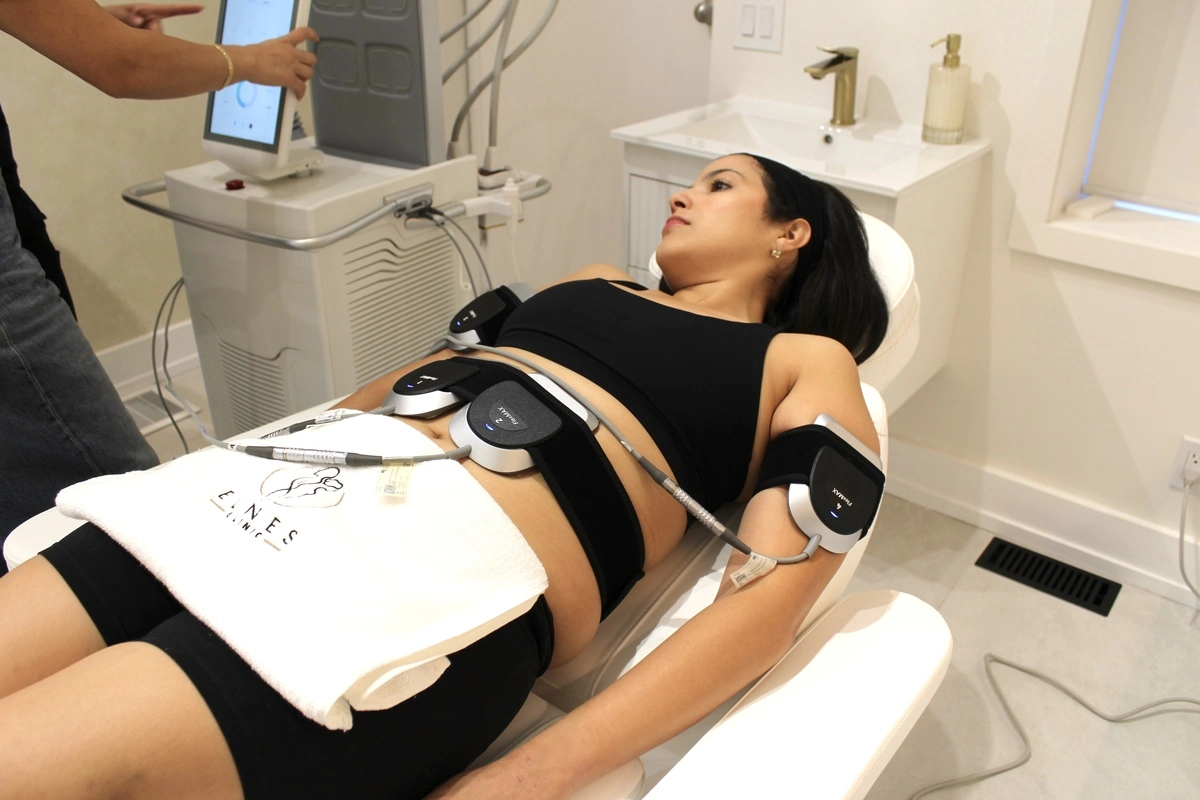
If you want extra support, EMSELLA by BTL may be worth asking about. At ELNES CLINIC (Yonge & Lawrence, Toronto), we use the original BTL device, not one of the many other pelvic floor chairs on the market, so you know exactly what you are getting. You sit fully clothed on the chair for about 28 minutes while it uses high-intensity focused electromagnetic energy to prompt pelvic floor muscle contractions. Nothing is inserted, and there is no downtime. EMSELLA is cleared by the FDA and licensed by Health Canada for urinary incontinence linked to a weakened pelvic floor. Clinical studies published by BTL and in peer-reviewed journals have reported improvements in symptoms for many participants, though individual results vary and cannot be guaranteed.
A typical treatment course includes six sessions, depending on individual needs, often scheduled twice a week over about three weeks. EMSELLA may suit women whose leaks are linked to a weak pelvic floor and who prefer a non-surgical option with no downtime. You do not need a referral. Before anything begins, our team reviews your medical history and confirms whether EMSELLA is an appropriate option for you.
If you have recently had a baby, you can discuss readiness at your postnatal check, usually around six weeks after delivery. EMSELLA should start only after proper healing and medical clearance. Gentle pelvic floor exercises may begin earlier with professional advice, which is separate from EMSELLA treatment.
When to Get Help
You can seek advice whenever leaks bother you, persist, or affect your daily life, and you do not need to wait. It is especially worth booking a visit if you notice any of the following:
- Blood in your urine, or pain or burning when you pee.
- Urine infections that keep coming back.
- Leaking that starts very suddenly.
- Trouble fully emptying your bladder.
Some symptoms need urgent care right away. Go to emergency services if you develop new numbness around your groin or saddle area, especially with weakness in your legs or a change in bladder or bowel control. A fever together with back or side pain also needs urgent medical attention. These signs are rare, but please do not wait on them.
The Bottom Line
Leaking when you sneeze, cough, or laugh is common, and it is nothing to feel ashamed of. Your body carries and does a great deal, and it responds well to the right support. The cause is personal, so the best plan is personal too, whether that means simple habits, physiotherapy, or a non-surgical option like EMSELLA by BTL. If leaks are getting in your way, the team at ELNES CLINIC (Yonge & Lawrence, Toronto) offers a FREE consultation to help you understand your choices. Book your free consultation online or call us at +1 888-266-4561 whenever you feel ready to take the next step.
Frequently Asked Questions
1. Is it normal to leak urine?
Leaking is common, but it is not something you simply have to accept. It is a sign your body needs support, and many women improve with the right plan.
2. Should I wait before getting help?
No. You can seek advice as soon as leaks bother you or affect your daily life. Earlier support often leads to faster results.
3. Can I treat leaks without surgery?
Yes. For most women, non-surgical steps come first, including pelvic floor physiotherapy, simple daily habits, and options like EMSELLA by BTL. Surgery is rarely the starting point.
4. Do I need to stop exercising?
No. Staying active is good for you. You may want to swap very high-impact moves for gentler ones at first while you build support, and a professional can guide you.
5. How many EMSELLA sessions will I need?
A typical treatment course includes six sessions, depending on individual needs, often scheduled twice a week over about three weeks.
6. How soon will I see results?
Some women notice changes within a few weeks, with bigger improvements building over the following months.